
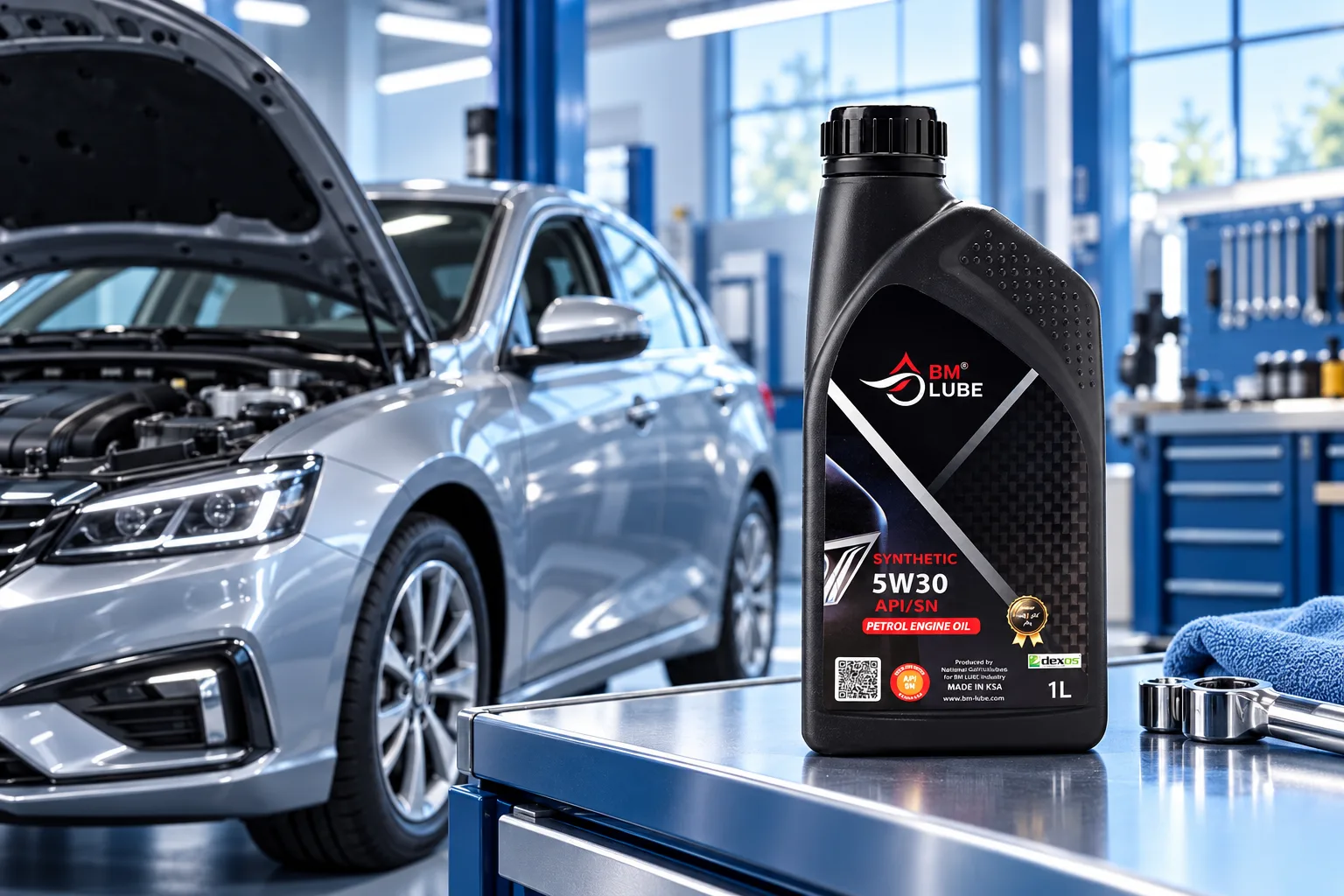
SAE describes viscosity
SAE grades classify oil viscosity under defined test conditions. Grades such as 0W-20 and 20W-50 are not automatically interchangeable. Suitability depends on engine design and the manufacturer’s instructions.
API describes a performance category
API categories describe engine-oil performance classes. The displayed range includes designations such as SN, SL, CH-4 and CI-4. Read the full designation: a partial match does not establish compatibility with your engine.
Read the label step by step
Start with the application: petrol engine, diesel engine or transmission. Then read the viscosity and performance specification. Confirm pack size and instructions, and consult the relevant technical data sheet for detailed properties.
Why “synthetic” is not enough
The word synthetic describes a broad formulation category. It does not replace the required viscosity or performance specification. A synthetic product can still be unsuitable for a vehicle that needs a different specification.
When to consult the technical data sheet
Use the correct data sheet when comparing similar products or checking a particular property. Typical values can vary between batches and do not establish suitability for every vehicle.